智能客服
你问我答,随时在线为你解决问题















版本号 | 发布时间 | 更新说明 |
|---|---|---|
1.0.5.300 | 2022-09-30 | 首次发布Java runtime SDK。 |
- <repositories>
- <repository>
- <id>developer_huawei</id>
- <url>https://developer.huawei.com/repo/</url>
- <releases>
- <enabled>true</enabled>
- </releases>
- <snapshots>
- <enabled>true</enabled>
- </snapshots>
- </repository>
- </repositories>
- <dependency>
- <groupId>com.huawei.agconnect.server</groupId>
- <artifactId>agconnect-function-java</artifactId>
- <version>1.0.5.300</version>
- </dependency>
入口方法定义如下:
- < T > handleRequest (I event, Context context) { ... }
完整的Java 1.8云函数示例代码请参考函数示例。
使用示例:log.debug()。
- String env1 = context.getClientContext().getEnvironments().get("env1");
若环境变量未配置,则会返回环境变量为null。

示例代码如下:
- Map<String, String> result = new HashMap<>();
- try {
- RunLog log = LogFactory.getRunLog();
- log.info(JSONObject.toJSONString(request));
- result.put("message", "success");
- return result;
- } catch(Exception err) {
- Map<String, String> error = new HashMap<>();
- error.put("error", err.getMessage());
- return error;
- }
示例代码如下:
示例代码中入口方法handleRequest()的返回值类型仅供您参考,您可以根据实际需要定义。
- package faas;
-
- import com.alibaba.fastjson.JSONObject;
- import java.util.HashMap;
- import java.util.Map;
-
- public class HelloPojo {
- /**
- * Describe the basic method of Cloud Functions
- *
- * @param request
- * @param context
- * @return HTTP response
- */
- public CanonicalHttpTriggerResponse handleRequest(JSONObject request, Context context) {
- // example of display environment variables
- String env1 = context.getClientContext().getEnvironments().get("env1");
-
- // example of display logs
- RunLog log = LogFactory.getRunLog();
- log.info("Test info log");
- log.warn("Test warn log");
- log.debug("Test debug log");
- log.error("Test error log");
-
- log.info("----------Start-----------");
- JSONObject result = new JSONObject();
- result.put("code", 0);
- try {
- long interval;
- long startTime = System.currentTimeMillis();
-
- // print input parameters and environment variables
- String req = request.getString("request");
- log.info("request : " + req + ", env1 : " + env1);
-
- long endTime = System.currentTimeMillis();
- interval = endTime - startTime;
- log.info("intervalTime: " + interval + "(ms)");
- result.put("intervalTime: ", interval + "(ms)");
- log.info("--------Finished---------");
- } catch (Exception e) {
- log.error("the ex is " + e.getMessage());
- result.put("msg", e.getMessage());
- }
- Map<String, String> header = new HashMap<>();
- header.put("faas-content-type", "json");
- header.put("res-type", "context.env");
- CanonicalHttpTriggerResponse resp = new CanonicalHttpTriggerResponse.Builder()
- .withContentType("application/json")
- .withHeaders(header)
- .base64Flag(false)
- .withStatusCode(200)
- .build();
- resp.setBody(result.toJSONString());
- return resp;
- }
- }
pom.xml文件:
- <dependency>
- <groupId>com.alibaba</groupId>
- <artifactId>fastjson</artifactId>
- <version>1.2.78</version>
- </dependency>
- <dependency>
- <groupId>com.huawei.agconnect.server</groupId>
- <artifactId>agconnect-function-java</artifactId>
- <version>1.0.5.300</version>
- </dependency>
函数部署包示例:java_demo.zip
Java函数部署包推荐结构如下所示,处理程序所在代码jar和依赖项放到lib文件夹,其他配置项放在config文件夹。
- function.zip
- |---config
- |---配置项
- |---lib
- |---依赖项 *.jar
- |---处理程序编译后的jar
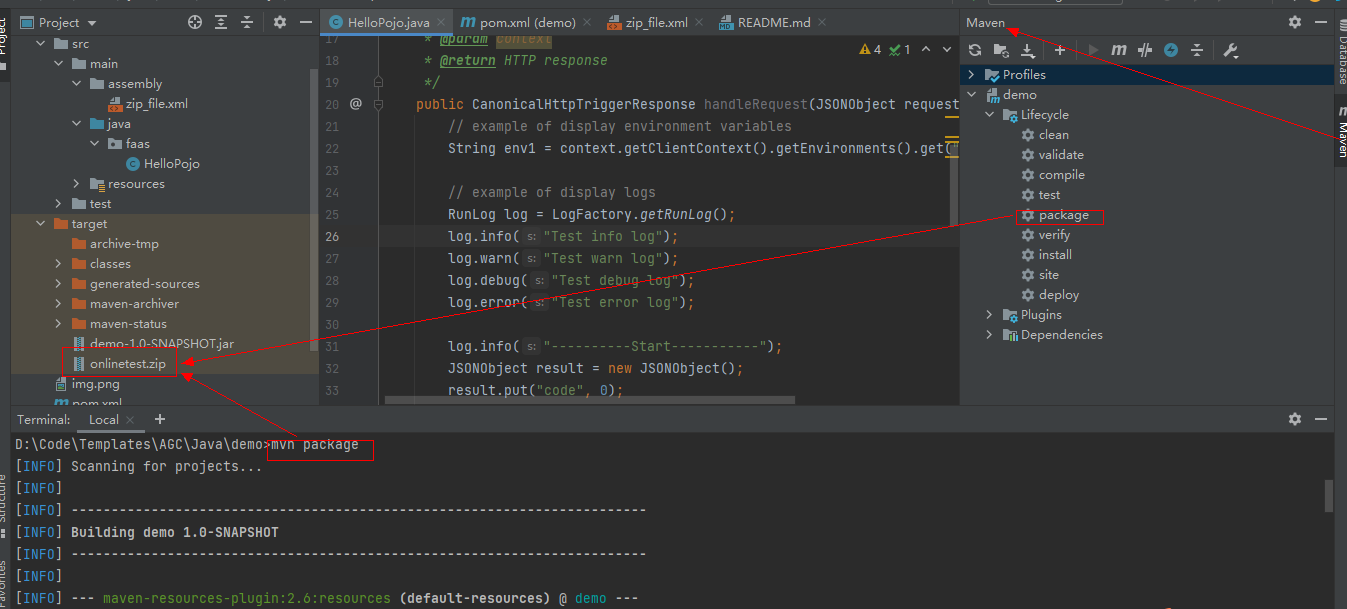
可通过Maven工具管理Java项目依赖:
- // 1.获取resources路径
- String resourcePath = Test.class.getClassLoader().getResource("").getPath();
- // 2.通过字符串拼接的方式得到配置文件agc-apiclient-*.json的路径
- String filePath = resourcePath + "agc-apiclient-*.json";
- <?xml version="1.0" encoding="UTF-8"?>
- <assembly
- xmlns="http://maven.apache.org/plugins/maven-assembly-plugin/assembly/1.1.2"
- >
-
- <id>auto-deploy</id>
-
- <baseDirectory></baseDirectory>
-
- <formats>
- <format>zip</format>
- </formats>
-
- <!--配置统一打包到config目录-->
- <fileSets>
- <fileSet>
- <directory>src/main/resources/</directory>
- <outputDirectory>config</outputDirectory>
- <includes>
- <include>**</include>
- </includes>
- <fileMode>0600</fileMode>
- <directoryMode>0700</directoryMode>
- </fileSet>
- </fileSets>
-
- <dependencySets>
- <dependencySet>
- <outputDirectory>lib</outputDirectory>
- <scope>runtime</scope>
- </dependencySet>
- </dependencySets>
- </assembly>
- <!--打包功能-->
- <build>
- <plugins>
- <plugin>
- <groupId>org.apache.maven.plugins</groupId>
- <artifactId>maven-assembly-plugin</artifactId>
- <version>2.2-beta-5</version>
- <configuration>
- <archive>
- <manifest>
- <addDefaultImplementationEntries>true</addDefaultImplementationEntries>
- </manifest>
- </archive>
- <appendAssemblyId>false</appendAssemblyId>
- </configuration>
- <executions>
- <execution>
- <id>auto-deploy</id>
- <phase>package</phase>
- <goals>
- <goal>single</goal>
- </goals>
- <configuration>
- <descriptors>
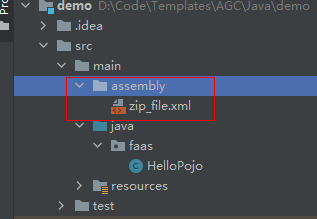
- <descriptor>src/main/assembly/zip_file.xml</descriptor>
- </descriptors>
- <finalName>onlinetest</finalName>
- <outputDirectory>target</outputDirectory>
- <archiverConfig>
- <directoryMode>0700</directoryMode>
- <fileMode>0600</fileMode>
- <defaultDirectoryMode>0700</defaultDirectoryMode>
- </archiverConfig>
- </configuration>
- </execution>
- </executions>
- </plugin>
- </plugins>
- </build>