














 谁在歇斯底里
各大排序算法(Java实现)
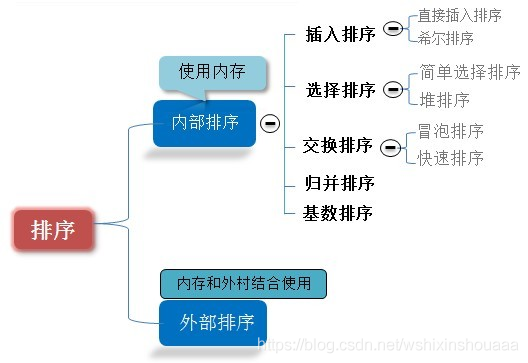
排序算法框架
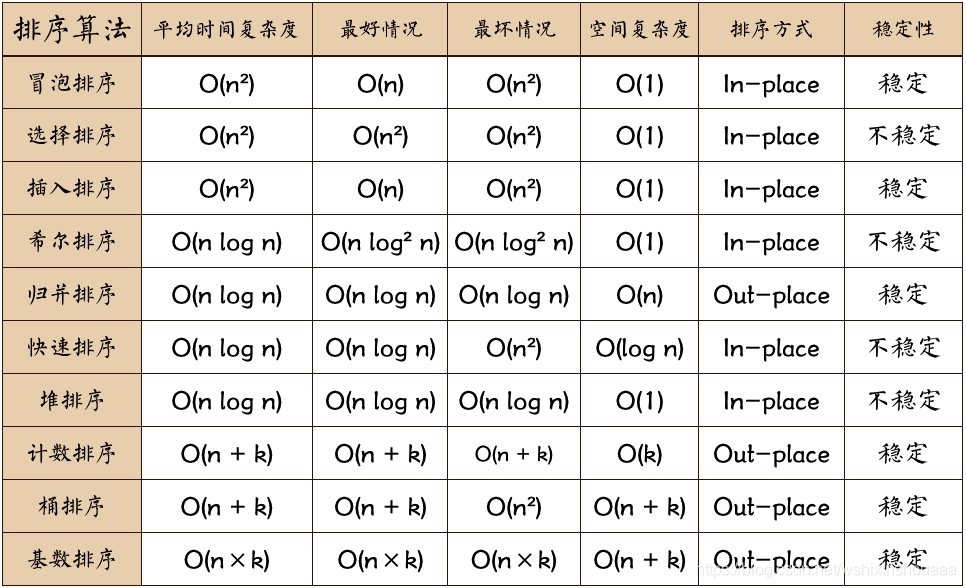
排序算法性质
插入排序
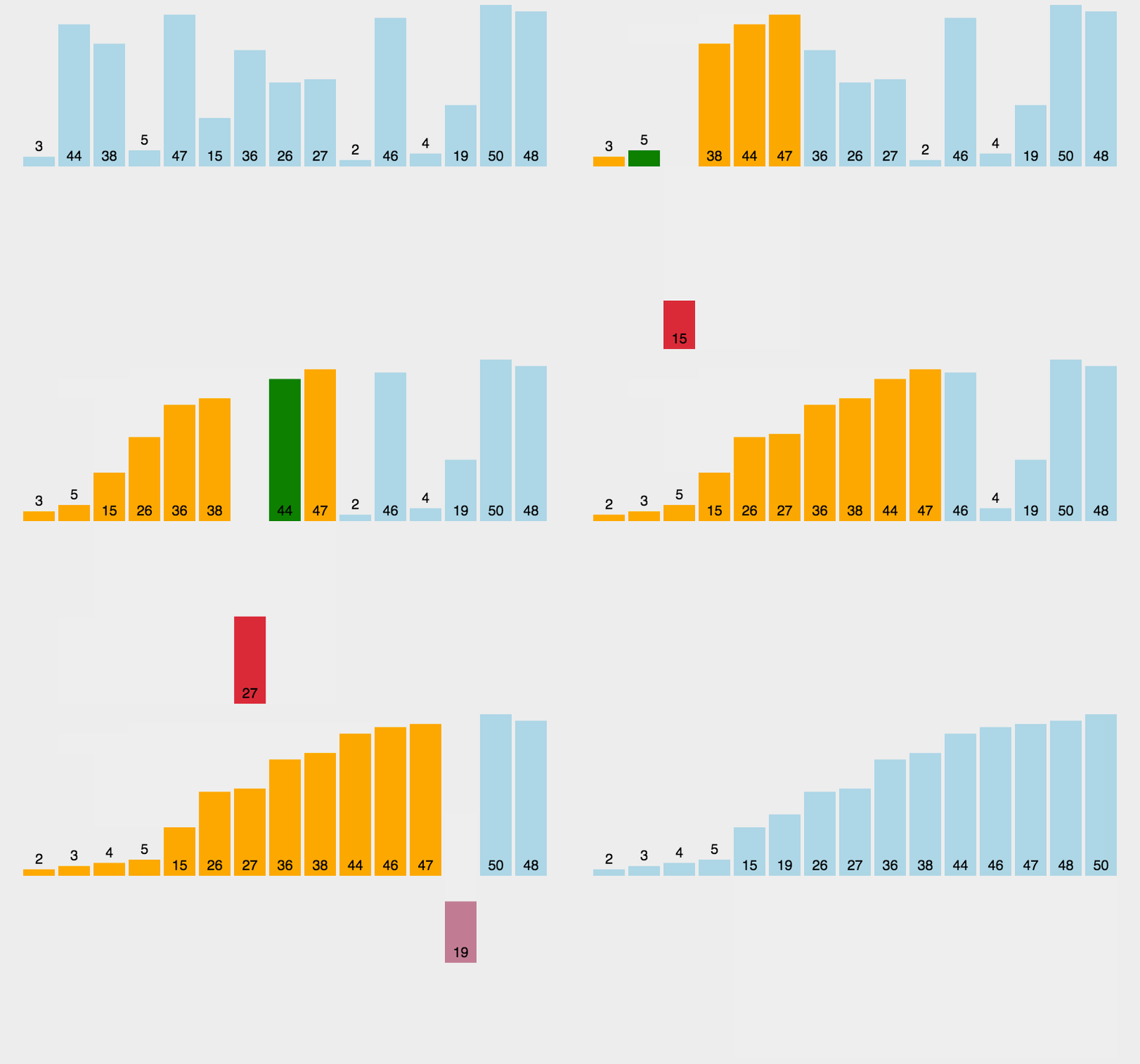
直接插入排序
- 从第一个元素开始,认为该元素是已排序的。
- 取出下一元素,与前面已经排好序的部分进行比较。
- 若比排好序部分的元素小,则将排好序部分的元素后移到下一位置。
- 遍历数组,直至结束。
最好的情况是数组有序,时间复杂度为O(n),平均复杂度是O(n²)。
代码实现
- public class Solution {
- public static void main(String[] args) {
- int[] array = {8, 1, 4, 9, 3, 5, 2, 7, 0, 6};
- insertSort(array);
- System.out.println(Arrays.toString(array));
- }
- private static void insertSort(int[] array) {
- for (int i = 0; i < array.length - 1; i++) {
- int data = array[i + 1];
- int index = i;
- while(index >= 0 && array[index] > data) {
- array[index + 1] = array[index];
- index--;
- }
- array[index + 1] = data;
- }
- }
- }
希尔排序
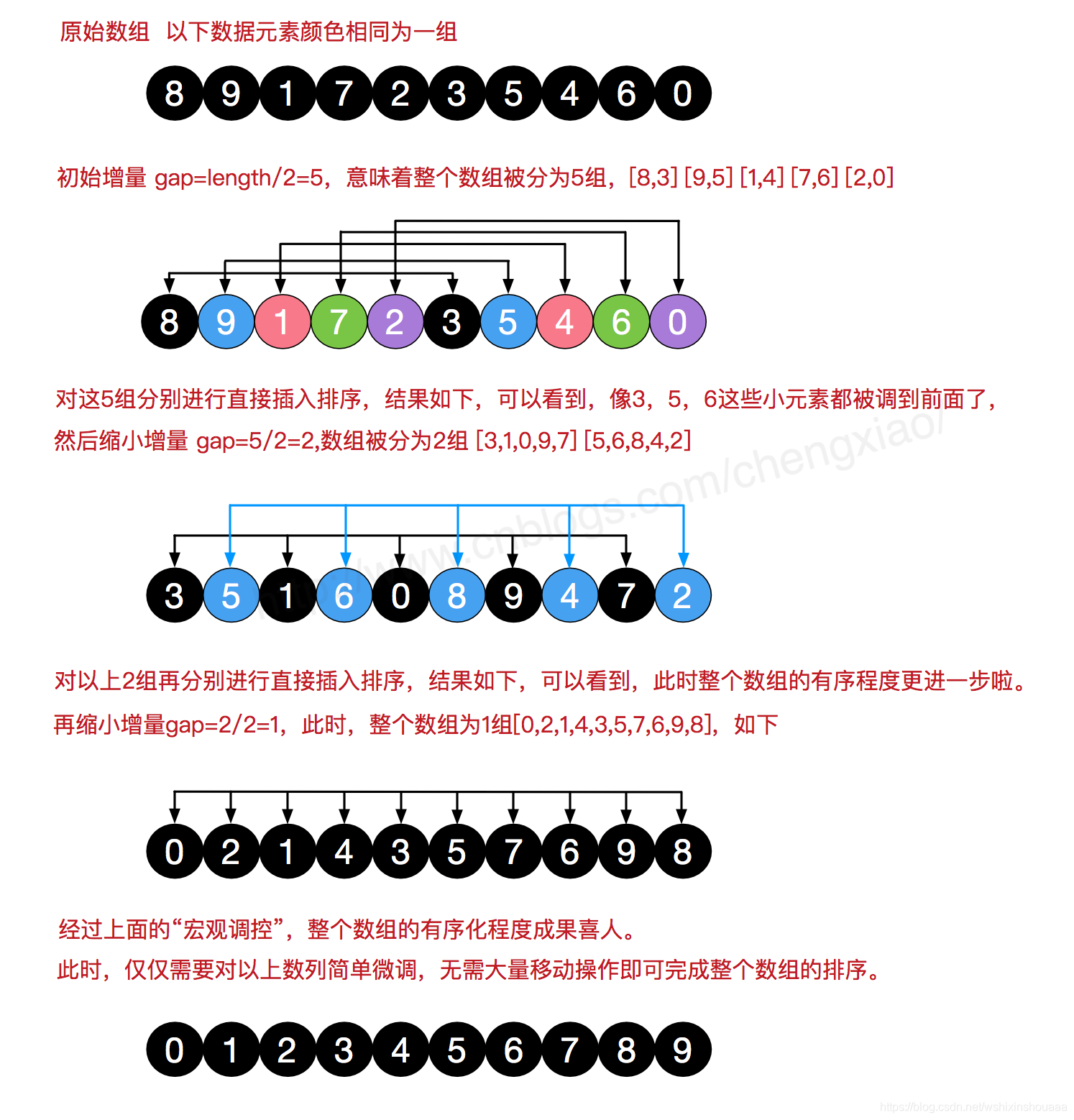
时间复杂度为 O (nlogn ) 。
代码实现
- public class Solution {
- public static void main(String[] args) {
- int[] array = {8, 9, 1, 7, 2, 3, 5, 4, 6, 0};
- shellSort(array);
- System.out.println(Arrays.toString(array));
- }
- private static void shellSort(int[] array) {
- int gap = array.length / 2;
- while (gap > 0) {
- for (int i = gap; i < array.length; i++) {
- int index = i - gap;
- int temp = array[i];
- while (index >= 0 && array[index] > temp) {
- swap(array, index, index + gap);
- index -= gap;
- }
- // array[index + gap] = temp;
- }
- gap /= 2;
- System.out.println(Arrays.toString(array));
- }
- }
- private static void swap(int[] array, int i, int index) {
- int temp = array[i];
- array[i] = array[index];
- array[index] = temp;
- }
- }
选择排序
简单选择排序
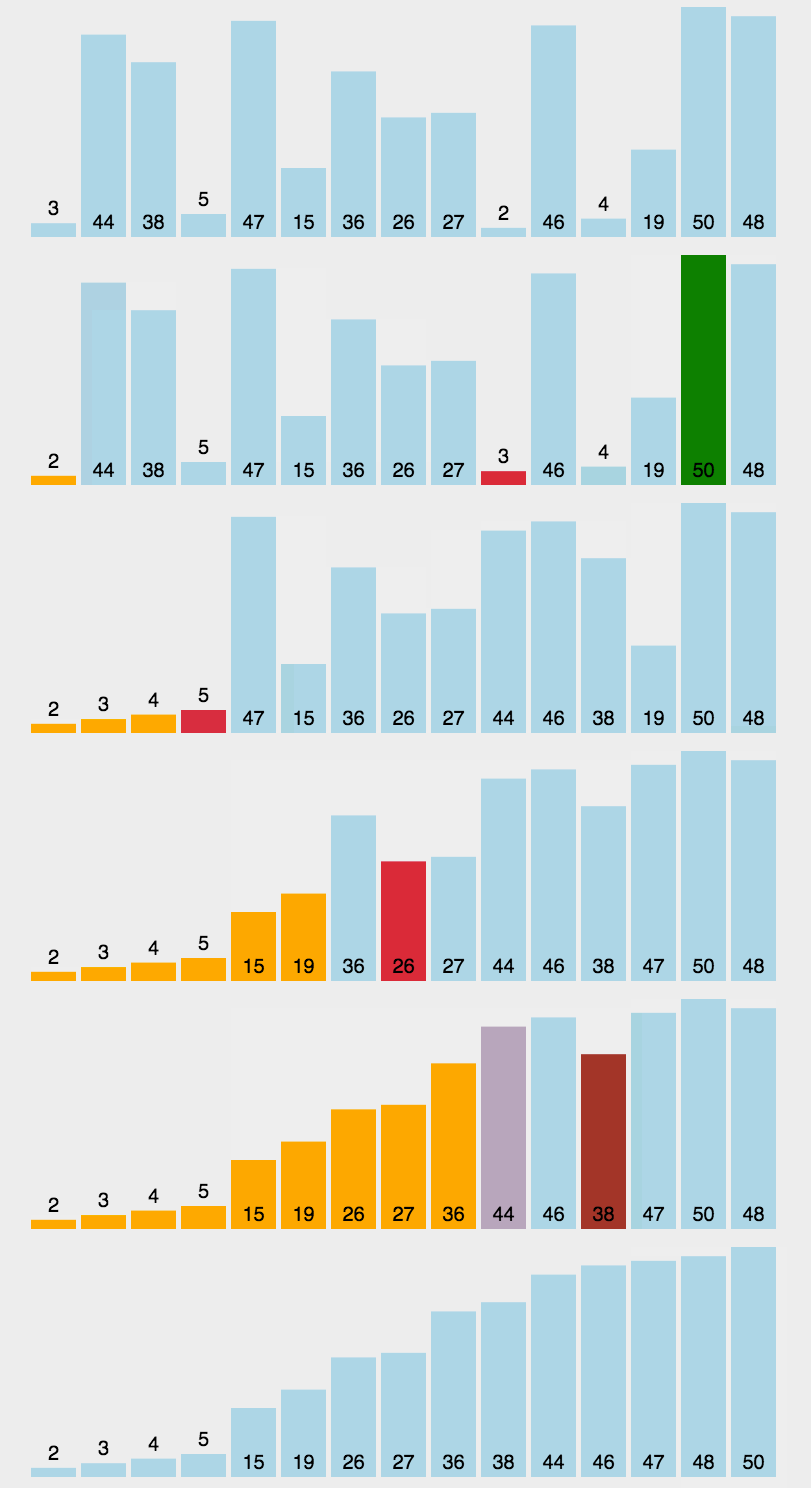
从未排序的初始数组中寻找最小元素放置首位。
从剩余元素中继续寻找最小元素,放到已排序序列的尾部
遍历数组,直至结束。
时间复杂度为 O (n²) 。
代码实现
- public class Solution {
- public static void main(String[] args) {
- int[] array = {8, 1, 4, 9, 3, 5, 2, 7, 0, 6};
- selectionSort(array);
- System.out.println(Arrays.toString(array));
- }
- private static void selectionSort(int[] array) {
- for (int i = 0; i < array.length; i++) {
- int index = i;
- for (int j = i; j < array.length; j++) {
- if (array[j] < array[index]) {
- index = j;
- }
- }
- swap(array, index, i);
- }
- }
- private static void swap(int[] array, int index, int i) {
- int temp = array[index];
- array[index] = array[i];
- array[i] = temp;
- }
- }
堆排序
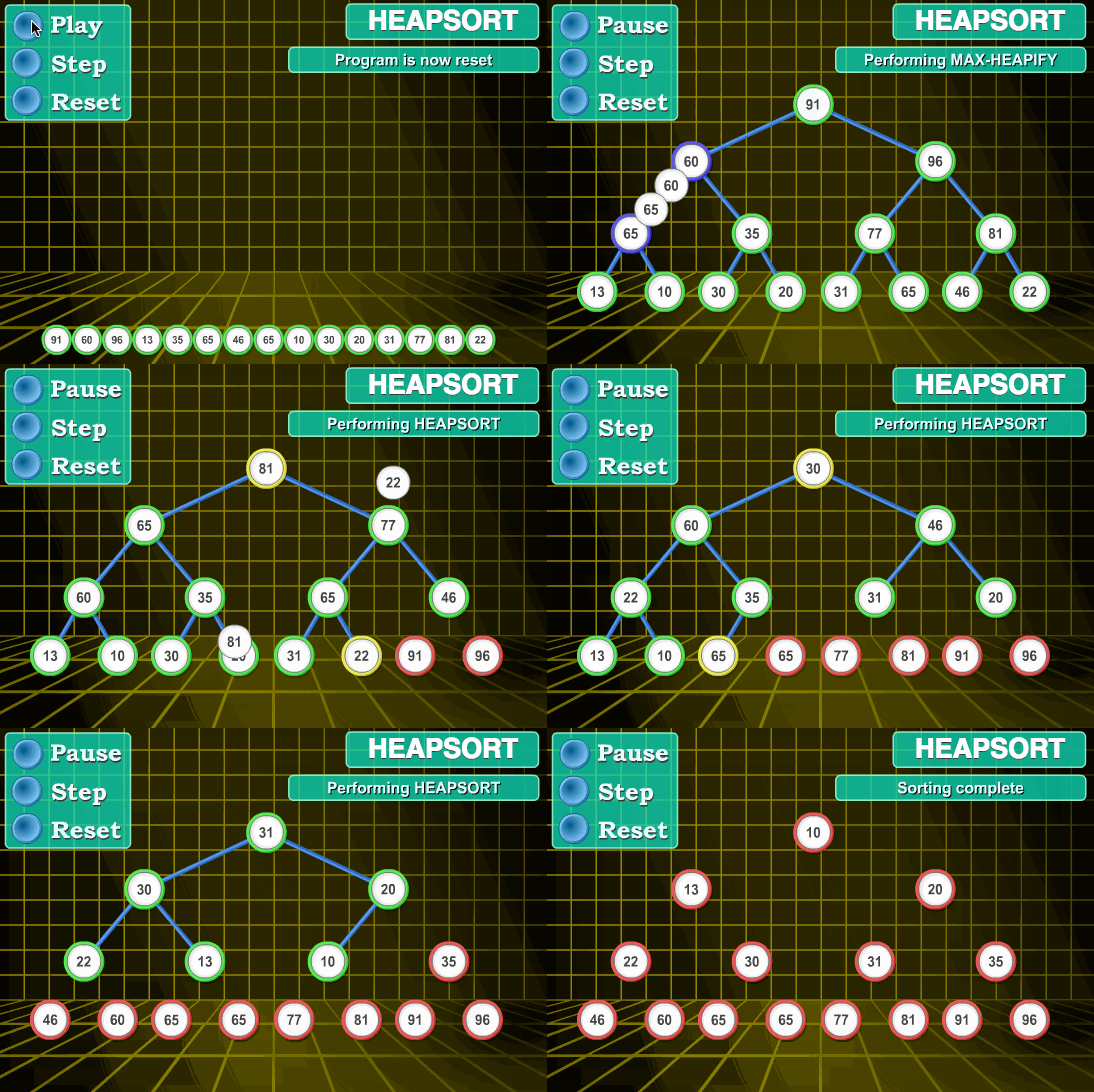
时间复杂度为 O (nlogn) 。
代码实现
- public class Solution {
- // 建堆
- public static void creatHeap(int[] arr, int n) {
- // 因为数组是从0开始的
- for (int i = (n - 1) / 2; i >= 0; i--) {
- percolateDown(arr, i, n);
- }
- }
- // 插入
- private static void insertHeap(int[] array, int data, int n) {
- array[n] = data;
- percolatrUp(array, n);
- }
- // 删除栈顶元素
- private static void deleteHeap(int[] arr, int n) {
- arr[0] = arr[n];
- arr[n] = -1;
- percolateDown(arr, 0, n - 1);
- }
- // 上浮
- private static void percolatrUp(int[] array, int n) {
- int data = array[n];
- int father = (n - 1) / 2;
- while (data < array[father] && father >= 0) {
- array[n] = array[father];
- array[father] = data;
- n = father;
- father = (n - 1) / 2;
- }
- array[father] = data;
- }
- // 下滤
- private static void percolateDown(int[] arr, int i, int n) {
- int father = arr[i];
- int child = 2 * i + 1;
- // 遍历整个该根结点的子树
- while (child <= n) {
- // 定位左右结点小的那一个
- if (child + 1 <= n && arr[child + 1] < arr[child]) {
- child += 1;
- }
- // 若根结点比子结点小,说明已经是个小堆
- if (father < arr[child]) {
- break;
- }
- // 互换根结点和子结点
- arr[i] = arr[child];
- arr[child] = father;
- // 重新定位根结点和子结点
- i = child;
- child = i * 2 + 1;
- }
- }
- public static void main(String[] args) {
- int[] array = { 15, 13, 12, 5, 20, 1, 8, 9 };
- creatHeap(array, array.length - 1);
- System.out.println(Arrays.toString(array));
- deleteHeap(array, array.length - 1);
- System.out.println(Arrays.toString(array));
- deleteHeap(array, array.length - 2);
- System.out.println(Arrays.toString(array));
- insertHeap(array, 3, array.length - 2);
- System.out.println(Arrays.toString(array));
- }
- }
交换排序
冒泡排序
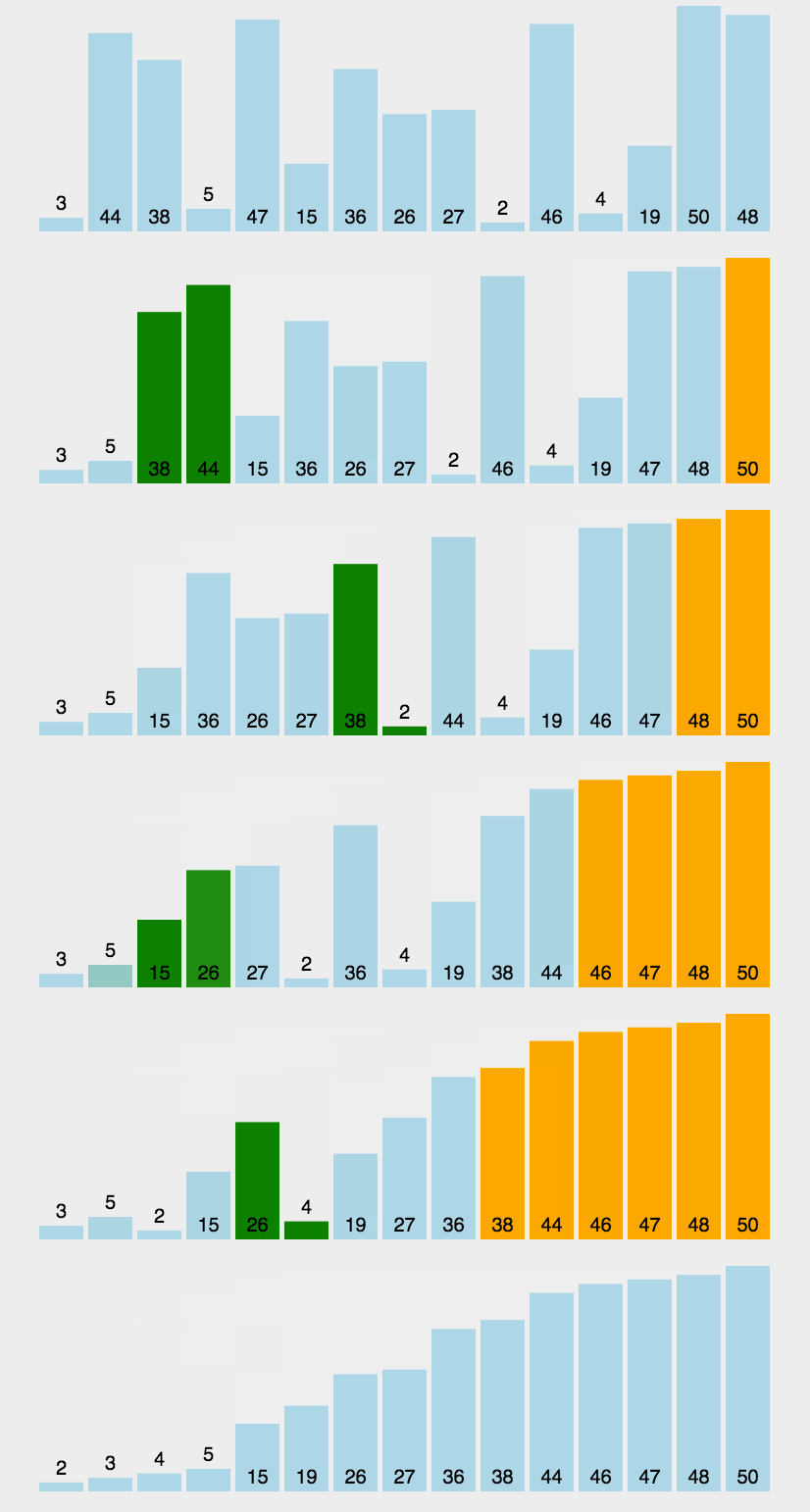
依次比较相邻的两个元素,若前者比后者大则交换,这样数组的最后一位是最大值。
在除了最后一位的未排序数组上继续重复以上步骤,每一步都能找到一个最大值放在后面。
遍历数组,直至结束。
最好的情况是数组已排序,时间复杂为 O (n) ,平均时间复杂度为 O(n²)
代码实现
- import java.util.Arrays;
- public class Solution {
- private static void bubbleSort(int[] nums) {
- // 循环次数
- for (int i = 0; i < nums.length - 1; i++) {
- // 比较次数
- for (int j = 0; j < nums.length - 1 - i; j++) {
- if (nums[j] > nums[j + 1]) {
- swap(nums, j, j + 1);
- }
- }
- }
- }
- private static void swap(int[] nums, int j, int i) {
- int temp = nums[j];
- nums[j] = nums[i];
- nums[i]= temp;
- }
- public static void main(String[] args) {
- int[] nums = { 6, 3, 8, 2, 9, 1 };
- bubbleSort(nums);
- System.out.println(Arrays.toString(nums));
- }
- }
快速排序
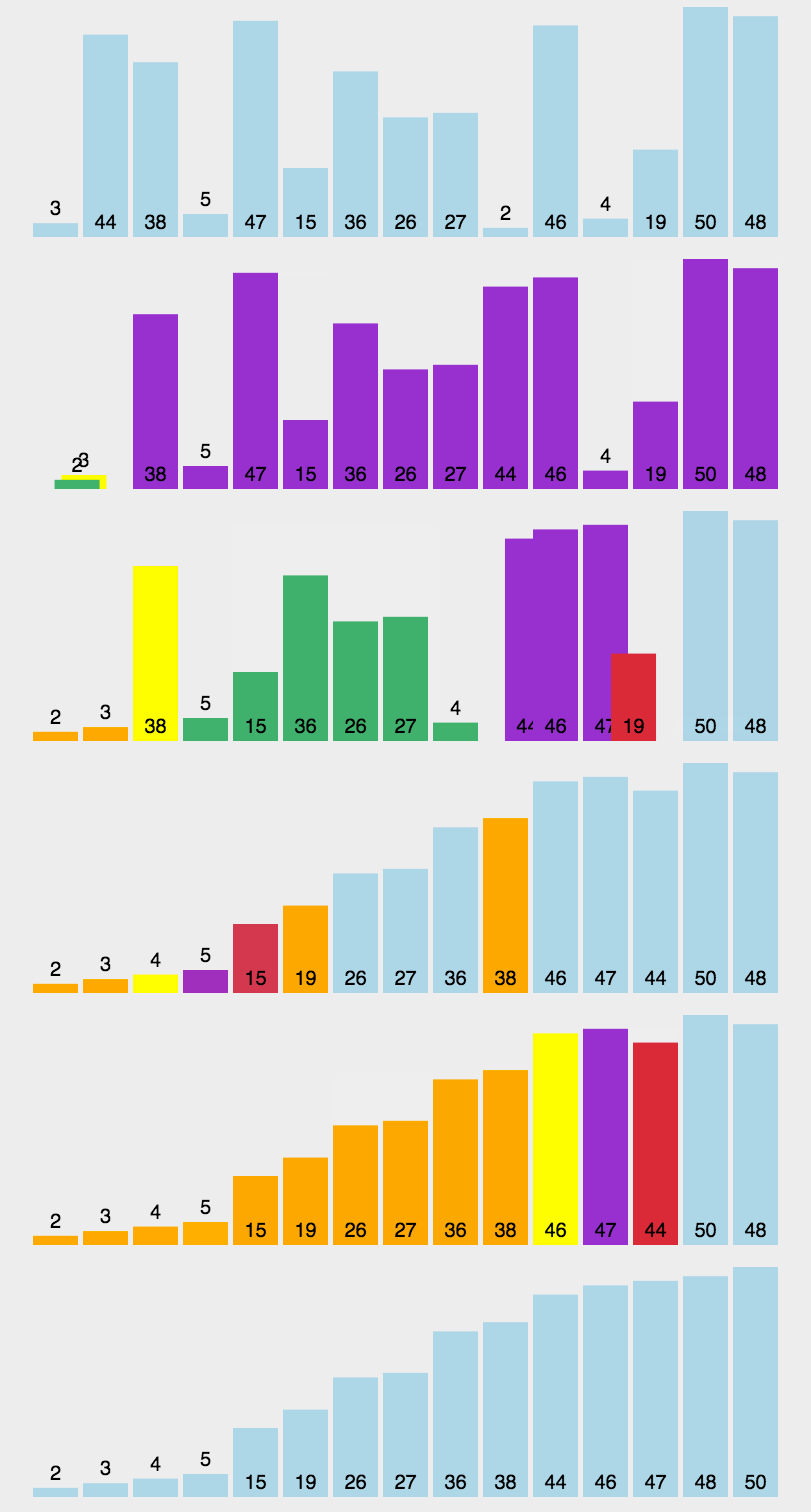
时间复杂度为 O (nlogn) 。
代码实现
- public class Solution {
- // Median-of-Three Partitioning
- public static int selectPivot(int[] array, int left, int right) {
- int middle = (left + right) / 2;
- if (array[middle] > array[right])
- swap(array, middle, left);
- if (array[left] > array[right])
- swap(array, left, right);
- if (array[middle] > array[left])
- swap(array, left, middle);
- return array[left];
- }
- public static void sort(int[] array, int left, int right) {
- if (left >= right)
- return;
- int index = partition(array, left, right);
- sort(array, left, index - 1);
- sort(array, index + 1, right);
- }
- public static int partition(int[] array, int left, int right){
- int pivot = selectPivot(array, left, right);
- while(left < right){
- while(left < right && array[right] >= pivot){
- right--;
- }
- if (left < right) {
- array[left++] = array[right];
- }
- while(left < right && array[left] < pivot){
- left++;
- }
- if (left < right) {
- array[right--] = array[left];
- }
- }
- array[right] = pivot;
- return right;
- }
- public static void swap(int[] array, int left, int right){
- int value = array[left];
- array[left] = array[right];
- array[right] = value;
- }
- public static void main(String[] args) {
- int[] array = {8, 1, 4, 9, 3, 5, 2, 7, 0, 6};
- // System.out.println(Arrays.toString(array));
- sort(array, 0, array.length - 1);
- System.out.println(Arrays.toString(array));
- }
- }
归并排序
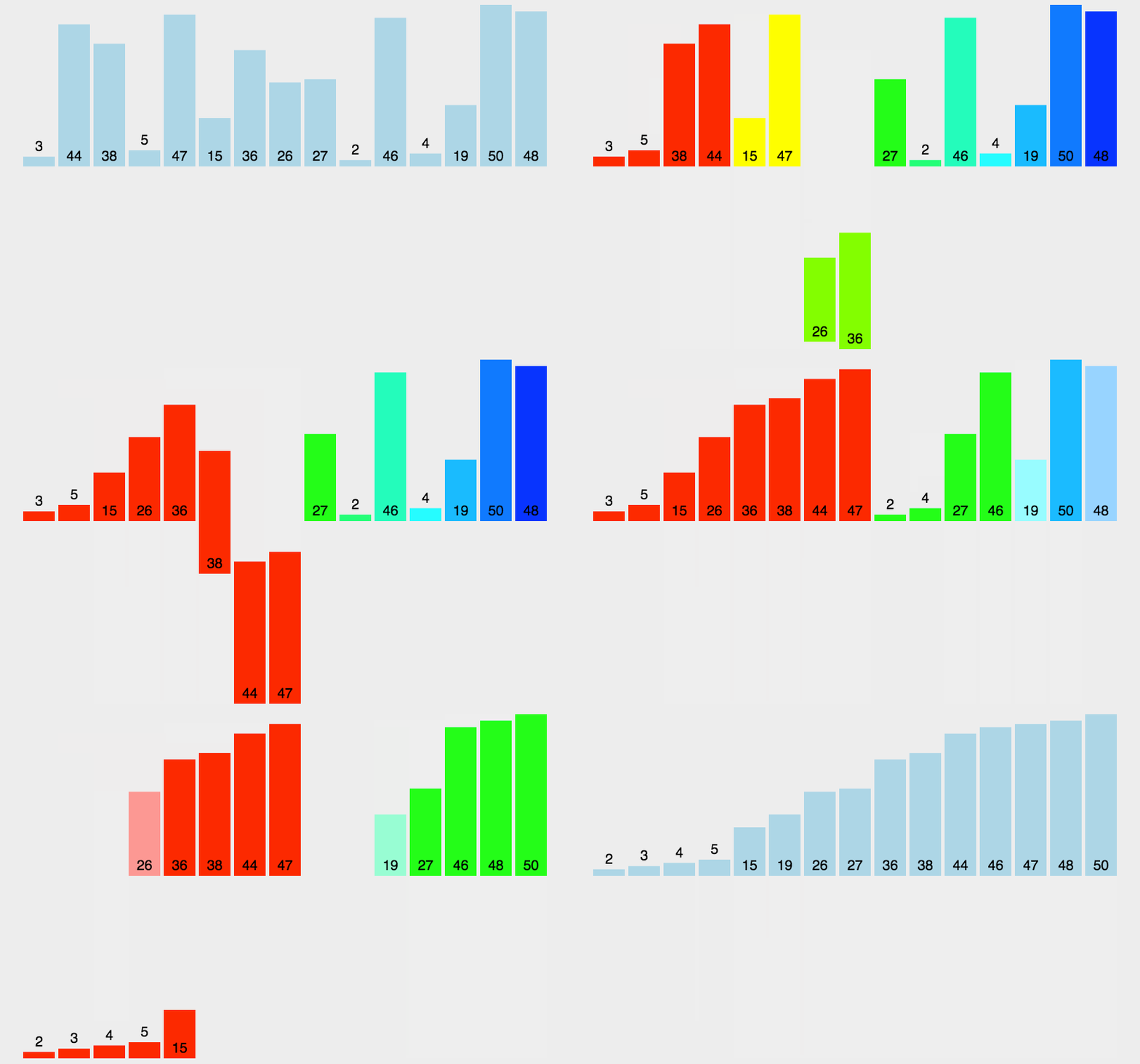
将长序列从中间分成两个子序列。
对这两个子序列依次继续执行重复分裂,直至不能再分。
递归返回两两排好序的子序列。
平均时间复杂度为 O (nlogn) 。
代码实现
- public class Solution {
- public static void main(String[] args) {
- int[] array = {8, 9, 1, 7, 2, 3, 5, 4, 6, 0};
- int[] arr = MergeSort(array);
- System.out.println(Arrays.toString(arr));
- }
- private static int[] MergeSort(int[] array) {
- if (array.length < 2)
- return array;
- int middle = array.length / 2;
- int[] leftArray = Arrays.copyOfRange(array, 0, middle);
- int[] rightArray = Arrays.copyOfRange(array, middle, array.length);
- return merge(MergeSort(leftArray), MergeSort(rightArray));
- }
- private static int[] merge(int[] leftArray, int[] rightArray) {
- int[] result = new int[leftArray.length + rightArray.length];
- for (int index = 0, i = 0, j = 0; index < result.length; index++) {
- if (i >= leftArray.length) {
- result[index] = rightArray[j++];
- } else if (j >= rightArray.length) {
- result[index] = leftArray[i++];
- } else if (leftArray[i] > rightArray[j]) {
- result[index] = rightArray[j++];
- } else {
- result[index] = leftArray[i++];
- }
- }
- return result;
- }
- }
基数排序
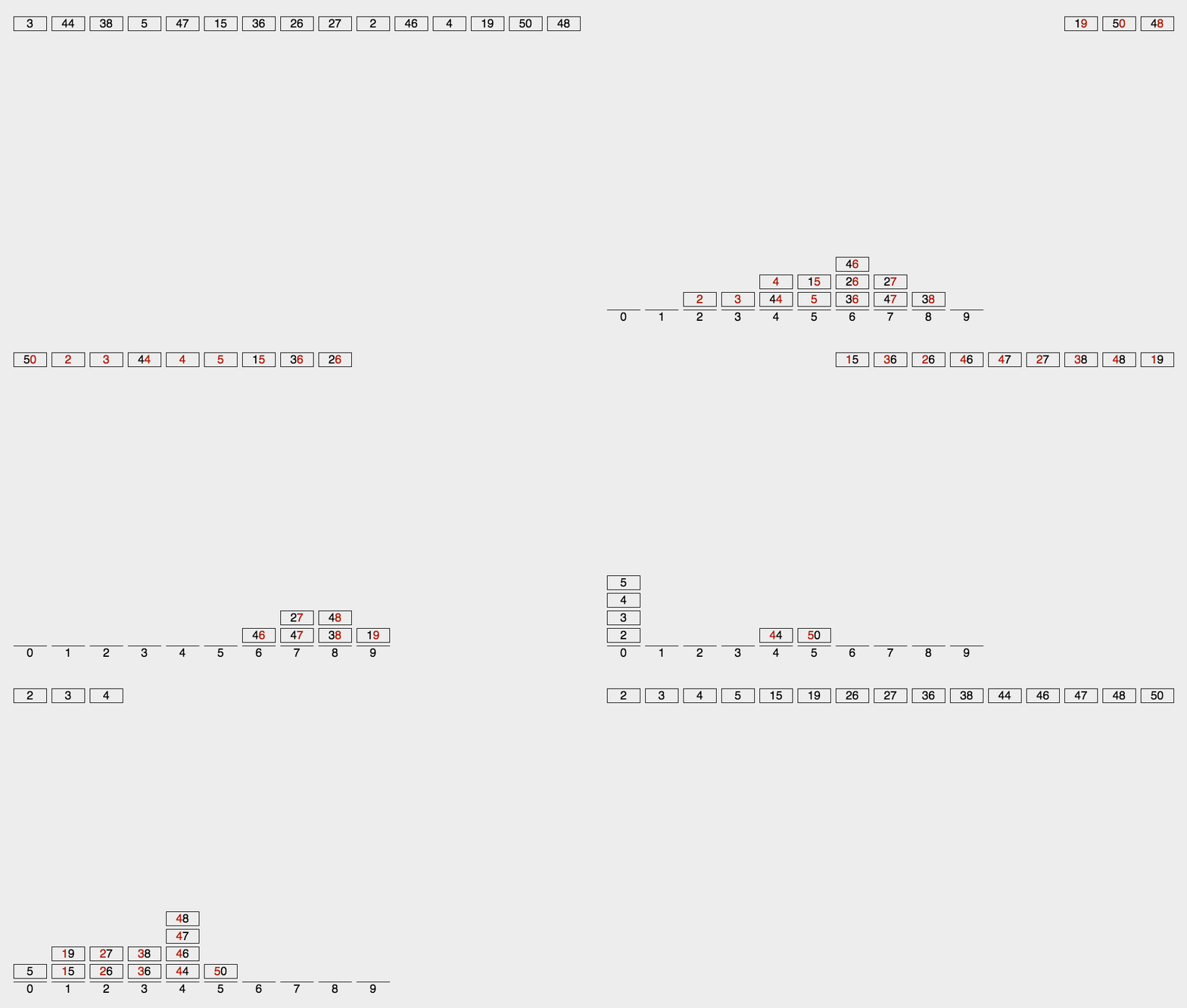
- 找到数组中最大的数,确定最多一共有几位数。
- 按照每个数字的最后一位,放入辅助数组中;同时设置一个计数数组,统计以数字 i 结尾的数字个数。
- 将辅助数组中的元素重新放入原数组中,然后按照下一位继续重复以上动作。
时间复杂度为 O ( n ∗ k ) 。
代码实现
- public class RadixSort {
- public static void main(String[] args) {
- int[] array = {3, 44, 38, 4, 47, 15, 36, 26, 27, 2, 46, 4, 19, 50, 32};
- int[] arr = radixSort(array);
- System.out.println(Arrays.toString(arr));
- }
- private static int[] radixSort(int[] array) {
- if (array == null || array.length < 2) {
- return array;
- }
- // 根据最大值找到最大位数
- int max = 0;
- for (int i = 0; i < array.length; i++) {
- max = Math.max(max, array[i]);
- }
- int maxDigit = 0;
- while (max != 0) {
- max /= 10;
- maxDigit++;
- }
- // 第一维: 0~9
- int[][] radix = new int[10][array.length];
- // 该位为 i 的元素个数
- int[] count = new int[10];
- int m = 1;
- int n = 1;
- while (m <= maxDigit) {
- for (int i = 0; i < array.length; i++) {
- int lsd = (array[i] / n) % 10;
- radix[lsd][count[lsd]] = array[i];
- count[lsd]++;
- }
- for (int i = 0, k = 0; i < 10; i++) {
- if (count[i] != 0) {
- for (int j = 0; j < count[i]; j++) {
- array[k++] = radix[i][j];
- }
- }
- count[i] = 0;
- }
- n *= 10;
- m++;
- }
- return array;
- }
- }
计数排序
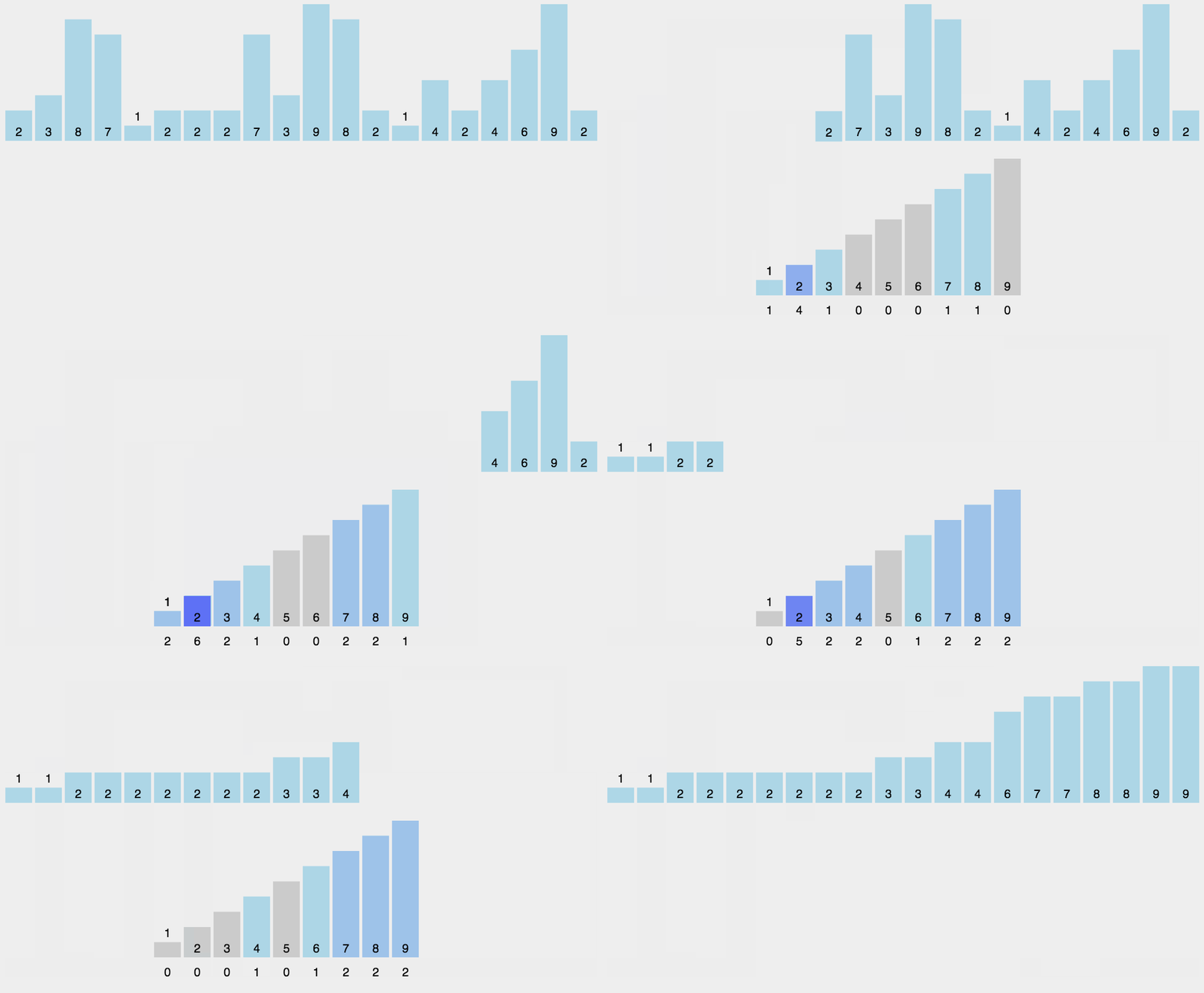
- 找到数组中最小值和最大值,辅助数组的大小为两者之差。设最小值为 2,最大值为 9,则辅助数组大小为 7。
- 统计数组中每个元素出现的次数,减去最小值,存入辅助数组中。比如 2,存放在辅助数组的第 0 位,7 放在辅助数组的第 5 位。
- 最后反向填充数组。遍历原数组,依次将辅助数组中不为 0 的元素下标加最小值,放回原数组对应位置。
时间复杂度为 O(n+k) 。
代码实现
- public class Solution {
- public static void main(String[] args) {
- int[] array = {8, 9, 4, 7, 2, 3, 5, 4, 6, 8};
- int[] arr = countSort(array);
- System.out.println(Arrays.toString(arr));
- }
- private static int[] countSort(int[] array) {
- if (array.length == 0)
- return array;
- int min = array[0], max = array[0];
- for (int i = 0; i < array.length; i++) {
- if (min > array[i]) {
- min = array[i];
- }
- if (max < array[i]) {
- max = array[i];
- }
- }
- int[] count = new int[max - min + 1];
- for (int i = 0; i < array.length; i++) {
- count[array[i] - min]++;
- }
- int i = 0;
- int index = 0;
- while (index < array.length) {
- if (count[i] != 0) {
- array[index] = i + min;
- count[i]--;
- index++;
- } else {
- i++;
- }
- }
- return array;
- }
- }
————————————————
版权声明:本文为CSDN博主「iTensor」的原创文章。
原文链接:https://blog.csdn.net/wshixinshouaaa/article/details/118683153


1

4


浏览502 发布于2021-07-20 04:47未知归属地
全部评论
最多点赞
最新发布
最早发布
写回答
新增插入模板功能
一键使用模板,快速填写内容,轻松发帖~
知道了
- 为了保障您的信息安全,请勿上传您的敏感个人信息(如您的密码等信息)和您的敏感资产信息(如关键源代码、签名私钥、调试安装包、业务日志等信息),且您需自行承担由此产生的信息泄露等安全风险。
- 如您发布的内容为转载内容,请注明内容来源。
我要发帖子
了解社区公约,与您携手共创和谐专业的开发者社区。


