Use Cases
This section describes how to add a TileOverlay. You can use your own TileOverlay data by either loading it from an online source or a local file. The TileOverlay can be transformed in response to map operations such as panning, zooming, and rotating. The TileOverlay layer is positioned directly above the base map (that is, the TileOverlay layer occludes only the base map but no other layers). The order in which the TileOverlay is added does not affect the overlay relationship of other layers.
You can use TileOverlays to add additional features, such as the indoor information of a shopping mall or details about a scenic spot, to the base map. This capability is applicable to the scenario where you have the map of a specific region and want to overlay it onto the corresponding region on Huawei map.
Starting from 5.0.3(15), the TileOverlay function is supported.
Starting from 6.0.0(20), the TileOverlay data caching function is supported.
Starting from 6.1.1(24), rules for reusing lower-zoom tiles at higher zoom levels are supported.
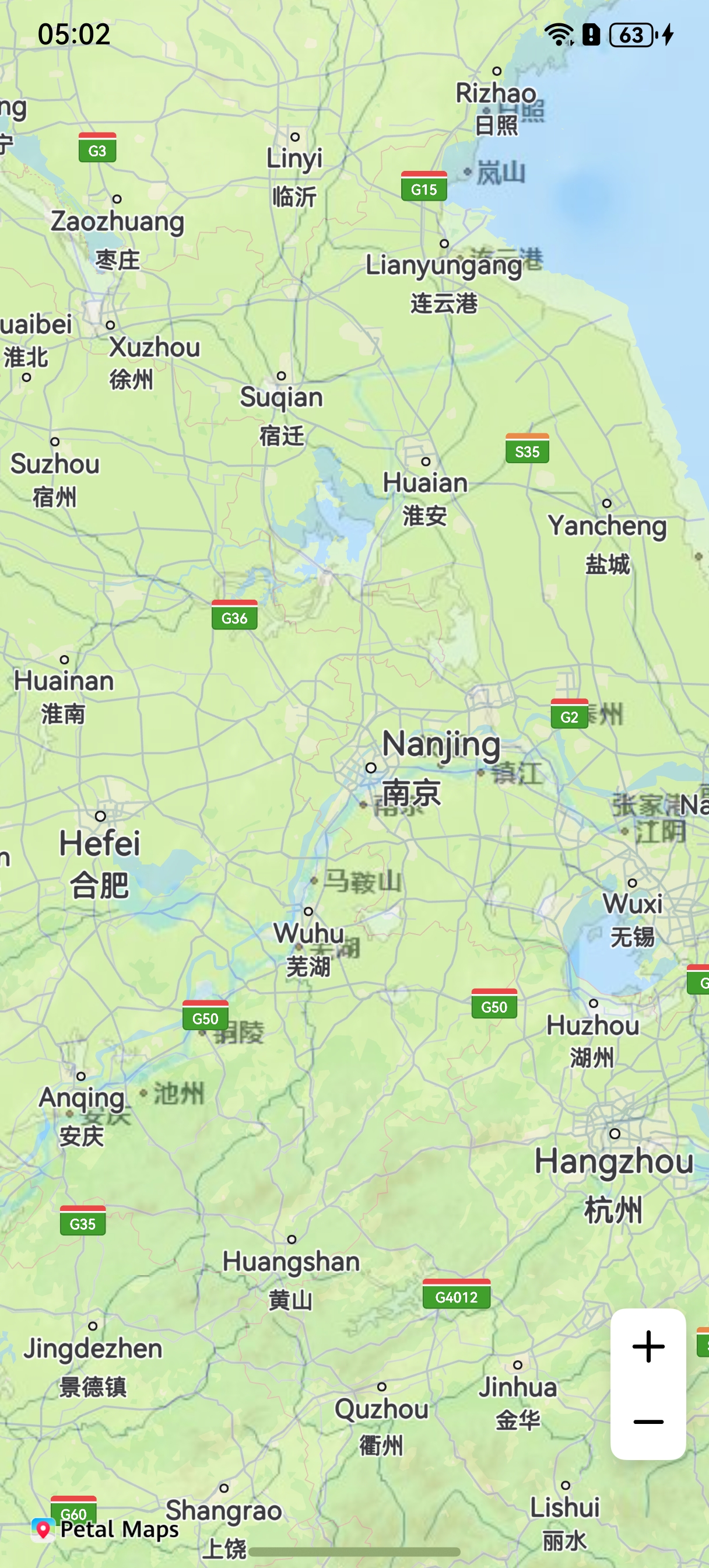
API Description
The TileOverlay functions are mainly provided by TileOverlayParams, TileOverlayOptions, addTileOverlay, and TileOverlay. For more information about the APIs, please refer to API Reference.
| API | Description |
|---|---|
| TileOverlayParams | TileOverlay parameters. |
| TileOverlayOptions | TileOverlay parameters. |
| addTileOverlay(params: mapCommon.TileOverlayParams | mapCommon.TileOverlayOptions): TileOverlay | Adds a TileOverlay to a map. |
| TileOverlay | TileOverlay. This API supports updating and querying TileOverlay attributes. |
[h2]Online Download
-
Import required modules.
import { map, mapCommon, MapComponent } from '@kit.MapKit'; import { AsyncCallback } from '@kit.BasicServicesKit'; -
Add a TileOverlay. Set the URL of the online TileOverlay.
@Entry
@Component
struct MapTileDemo {
  // ...
  private mapOptions?: mapCommon.MapOptions;
  private mapController?: map.MapComponentController;
  private callback?: AsyncCallback<map.MapComponentController>;
  private tileOverlay?: map.TileOverlay;

  aboutToAppear(): void {
    this.mapOptions = {
      position: {
        target: {
          latitude: 31.98,
          longitude: 118.7
        },
        zoom: 7
      }
    }

    this.callback = async (err, mapController) => {
      if (!err) {
        this.mapController = mapController;
        let params: mapCommon.TileOverlayOptions = {
          // Set the URL of the TileOverlay, which must start with http or https and contain placeholders {x}, {y}, and {z}.
          // Replace it with your own URL.
          tileUrl: 'https://xxx/xxx?x={x}&y={y}&z={z}',
          // Set the transparency.
          transparency: 0.5,
          // Enable the TileOverlay fade-in effect.
          fadeIn: true
        };
        try {
          this.tileOverlay = this.mapController?.addTileOverlay(params);
        } catch (e) {
          console.error(`code:${e.code}, message:${e.message}`);
        }
      } else {
        console.error(`Failed to initialize the map. Code: ${err.code}; message: ${err.message}`);
      }
    }
  }

  build() {
    // ...
      Stack() {
        Column() {
          MapComponent({ mapOptions: this.mapOptions, mapCallback: this.callback });
        }.width('100%')
      }.height('100%')

      // ...
  }
}
[h2]Local Loading
-
Import required modules.
import { map, mapCommon, MapComponent } from '@kit.MapKit'; import { AsyncCallback } from '@kit.BasicServicesKit'; -
Add a local TileOverlay.
@Entry
@Component
struct MapTileDemo {
  // ...
  private mapOptions?: mapCommon.MapOptions;
  private mapController?: map.MapComponentController;
  private callback?: AsyncCallback<map.MapComponentController>;
  private tileOverlay?: map.TileOverlay;

  aboutToAppear(): void {
    this.mapOptions = {
      position: {
        target: {
          latitude: 31.98,
          longitude: 118.7
        },
        zoom: 7
      },
      scaleControlsEnabled: true
    }

    this.callback = async (err, mapController) => {
      if (!err) {
        this.mapController = mapController;
        let tileOverlayOption: mapCommon.TileOverlayOptions = {
          // Obtain the TileOverlay based on the coordinates. You need to implement the tileProvider method to obtain the TileOverlay data locally.
          tileProvider: this.tileProviderMethod,
          // Fade-in and fade-out effect (true: enabled; false: disabled).
          fadeIn: true,
          // Transparency (the value ranges from 0 to 1).
          transparency: 0.5,
          // Visibility (true: visible; false: invisible).
          visible: true
        }
        if (this.mapController !== undefined) {
          try {
            this.tileOverlay = this.mapController.addTileOverlay(tileOverlayOption);
          } catch (e) {
            console.error(`code:${e.code}, message:${e.message}`);
          }
        }
      } else {
        console.error(`Failed to initialize the map. Code: ${err.code}; message: ${err.message}`);
      }
    }
  }

  // Implement the tileProviderMethod method to load tile images from the local project.
  private tileProviderMethod(x: number, y: number, z: number): Promise<ArrayBuffer> {
    return new Promise((resolve, reject) => {
    });
  }

  build() {
    // ...
      Stack() {
        Column() {
          MapComponent({ mapOptions: this.mapOptions, mapCallback: this.callback });
        }.width('100%')
      }.height('100%')

      // ...
  }
}
[h2]Caching TileOverlay Data
-
Import required modules.
import { mapCommon, map, MapComponent } from '@kit.MapKit'; import { AsyncCallback } from '@kit.BasicServicesKit'; -
Add a TileOverlay.
@Entry
@Component
struct MapTileDemo {
  // ...
  private mapOptions?: mapCommon.MapOptions;
  private mapController?: map.MapComponentController;
  private callback?: AsyncCallback<map.MapComponentController>;
  private tileOverlay?: map.TileOverlay;

  aboutToAppear(): void {
    this.mapOptions = {
      position: {
        target: {
          latitude: 48.87278,
          longitude: 2.33016
        },
        zoom: 4
      },
      scaleControlsEnabled: true
    }

    this.callback = async (err, mapController) => {
      if (!err) {
        this.mapController = mapController;
        let options: mapCommon.TileOverlayOptions = {
          // Set the URL of the TileOverlay, which must start with http or https and contain placeholders {x}, {y}, and {z}.
          // Replace it with your own URL.
          tileUrl: 'https://xxx/xxx?x={x}&y={y}&z={z}',
          // Whether to enable disk caching (true: yes; false: no).
          diskCacheEnabled: true,
          // Disk cache size, in KB. The default value is 20480.
          diskCacheSize: 20480,
          // Sandbox path for storing disk cache.
          diskCachePath: this.getUIContext().getHostContext()?.databaseDir
        };
        if (this.mapController !== undefined) {
          try {
            this.tileOverlay = this.mapController.addTileOverlay(options);
          } catch (e) {
            console.error(`code:${e.code}, message:${e.message}`);
          }
        }
      } else {
        console.error(`Failed to initialize the map. Code: ${err.code}; message: ${err.message}`);
      }
    }
  }

  aboutToDisappear(): void {
    if (this.tileOverlay) {
      this.tileOverlay.remove();
      // Clear the memory cache.
      this.tileOverlay.clearTileCache();
      // Clear the disk and memory caches.
      this.tileOverlay.clearDiskCache();
    }
  }

  build() {
    // ...
      Stack() {
        Column() {
          MapComponent({ mapOptions: this.mapOptions, mapCallback: this.callback });
        }.width('100%')
      }.height('100%')

      // ...
  }
}
[h2]Reusing Lower-Zoom Tiles at Higher Zoom Levels
The capability of reusing lower-zoom tiles at higher zoom levels can effectively reduce the computing and rendering workload on low-performance devices and reduce the dependency on bandwidth in poor network conditions. This enables quick tile loading and improves the smoothness and responsiveness of map display.
Define the rules for reusing lower-zoom tiles at higher zoom levels.
let params: mapCommon.TileOverlayOptions = {
  // URL of the TileOverlay, which must start with http or https and contain placeholders in the ?x={x}&y={y}&z={z} format.
  tileUrl: 'https://xxx/xxx?x={x}&y={y}&z={z}',
  diskCacheEnabled: true,
  diskCacheSize: 20480,
  diskCachePath: '/data/storage/el2/database',
  // Configuration item for reusing lower-zoom tiles at higher zoom levels.
  tileDataReuse: [2, 3, 4, 5, 6, 6, 6, 6, 6, 6, 6, 6, 7, 7, 7, 7, 7, 7, 7]
};