开发者使用Web组件将应用侧代码注册到前端页面中,注册完成之后,前端页面中使用注册的对象名称就可以调用应用侧的方法。
如何建立应用侧与H5侧的交互通道
注册应用侧代码有两种方式,一种在Web组件初始化调用,使用javaScriptProxy()接口。另外一种在Web组件初始化完成后调用,使用registerJavaScriptProxy()接口。两种方式都需要和deleteJavaScriptRegister接口配合使用,防止内存泄漏。
在下面的示例中,将test()方法注册在前端页面中, 该函数可以在前端页面触发运行。
应用侧使用javaScriptProxy()接口注册示例:
import { webview } from '@kit.ArkWeb';
import { BusinessError } from '@kit.BasicServicesKit';

class TestClass {
  constructor() {
  }

  test(): string {
    return 'ArkTS Hello World!';
  }
}

@Entry
@Component
struct WebComponent {
  webviewController: webview.WebviewController = new webview.WebviewController();
  // 声明需要注册的对象
  @State testObj: TestClass = new TestClass();

  build() {
    Column() {
      Button('deleteJavaScriptRegister')
        .onClick(() => {
          try {
            this.webviewController.deleteJavaScriptRegister('testObjName');
            this.webviewController.refresh();
          } catch (error) {
            console.error(
              `ErrorCode: ${(error as BusinessError).code},  Message: ${(error as BusinessError).message}`);
          }
        })
      // Web组件加载本地index.html页面
      Web({ src: $rawfile('index1.html'), controller: this.webviewController})
        // 将对象注入到web端
        .javaScriptProxy({
          object: this.testObj,
          name: 'testObjName',
          methodList: ['test'],
          controller: this.webviewController,
          // 可选参数
          asyncMethodList: [],
          permission: '{"javascriptProxyPermission":{"urlPermissionList":' +
            '[{"scheme":"resource","host":"rawfile","port":"","path":""},' +
            '{"scheme":"e","host":"f","port":"g","path":"h"}],"methodList":' +
            '[{"methodName":"test","urlPermissionList":' +
            '[{"scheme":"https","host":"xxx.com","port":"","path":""},' +
            '{"scheme":"resource","host":"rawfile","port":"","path":""}]},' +
            '{"methodName":"test11","urlPermissionList":' +
            '[{"scheme":"q","host":"r","port":"","path":"t"},' +
            '{"scheme":"u","host":"v","port":"","path":""}]}]}}'
        })
    }
  }
} 应用侧使用registerJavaScriptProxy()接口注册。

-
示例1:
// xxx.ets import { webview } from '@kit.ArkWeb'; import { BusinessError } from '@kit.BasicServicesKit'; class TestClass { constructor() { } test(): string { return 'ArkUI Web Component'; } toString(): void { console.info('Web Component toString'); } } @Entry @Component struct Index { webviewController: webview.WebviewController = new webview.WebviewController(); @State testObj: TestClass = new TestClass(); build() { Column() { // jsb对象不再使用后,需解除注册,防止内存泄漏 Button('deleteJavaScriptRegister') .onClick(() => { try { this.webviewController.deleteJavaScriptRegister('testObjName'); this.webviewController.refresh(); } catch (error) { console.error(`ErrorCode: ${(error as BusinessError).code}, Message: ${(error as BusinessError).message}`); } }) Web({ src: $rawfile('index1.html'), controller: this.webviewController }) // 在页面加载前注册,页面加载完成后生效 .onControllerAttached(()=>{ try { this.webviewController.registerJavaScriptProxy(this.testObj, 'testObjName', ['test', 'toString'], // 可选参数, asyncMethodList [], // 可选参数, permission '{"javascriptProxyPermission":{"urlPermissionList":[{"scheme":"resource","host":"rawfile","port":"","path":""},' + '{"scheme":"e","host":"f","port":"g","path":"h"}],"methodList":[{"methodName":"test","urlPermissionList":' + '[{"scheme":"https","host":"xxx.com","port":"","path":""},{"scheme":"resource","host":"rawfile","port":"","path":""}]},' + '{"methodName":"test11","urlPermissionList":[{"scheme":"q","host":"r","port":"","path":"t"},' + '{"scheme":"u","host":"v","port":"","path":""}]}]}}' ); } catch (error) { console.error(`ErrorCode: ${(error as BusinessError).code}, Message: ${(error as BusinessError).message}`); } }) } } } -
示例2:
// xxx.ets import { webview } from '@kit.ArkWeb'; import { BusinessError } from '@kit.BasicServicesKit'; class TestClass { constructor() { } test(): string { return 'ArkUI Web Component'; } toString(): void { console.info('Web Component toString'); } } @Entry @Component struct Index { webviewController: webview.WebviewController = new webview.WebviewController(); @State testObj: TestClass = new TestClass(); @State isRegistered: boolean = false; build() { Column() { // jsb对象不再使用后,需解除注册,防止内存泄漏 Button('deleteJavaScriptRegister') .onClick(() => { try { this.webviewController.deleteJavaScriptRegister('testObjName'); this.webviewController.refresh(); } catch (error) { console.error(`ErrorCode: ${(error as BusinessError).code}, Message: ${(error as BusinessError).message}`); } }) Web({ src: $rawfile('index1.html'), controller: this.webviewController }) .onPageEnd(()=>{ try { if(!this.isRegistered){ this.webviewController.registerJavaScriptProxy(this.testObj, 'testObjName', ['test', 'toString'], // 可选参数, asyncMethodList [], // 可选参数, permission '{"javascriptProxyPermission":{"urlPermissionList":[{"scheme":"resource","host":"rawfile","port":"","path":""},' + '{"scheme":"e","host":"f","port":"g","path":"h"}],"methodList":[{"methodName":"test","urlPermissionList":' + '[{"scheme":"https","host":"xxx.com","port":"","path":""},{"scheme":"resource","host":"rawfile","port":"","path":""}]},' + '{"methodName":"test11","urlPermissionList":[{"scheme":"q","host":"r","port":"","path":"t"},' + '{"scheme":"u","host":"v","port":"","path":""}]}]}}' ); this.isRegistered = true; // onPageEnd中注册方法后,需重新加载后生效 this.webviewController.refresh(); } } catch (error) { console.error(`ErrorCode: ${(error as BusinessError).code}, Message: ${(error as BusinessError).message}`); } }) } } } -
可选参数permission是一个JSON字符串,示例如下:
{ "javascriptProxyPermission": { "urlPermissionList": [ // Object级权限,如果匹配,所有Method都授权 { "scheme": "resource", // 精确匹配,不能为空,必填 "host": "rawfile", // 精确匹配,不能为空,必填 "port": "", // 精确匹配,为空不检查,必填 "path": "" // 前缀匹配,为空不检查,必填 }, { "scheme": "https", // 精确匹配,不能为空,必填 "host": "xxx.com", // 精确匹配,不能为空,必填 "port": "8080", // 精确匹配,为空不检查,必填 "path": "a/b/c" // 前缀匹配,为空不检查,必填 } ], "methodList": [ { "methodName": "test", "urlPermissionList": [ // Method级权限 { "scheme": "https", // 精确匹配,不能为空,必填 "host": "xxx.com", // 精确匹配,不能为空,必填 "port": "", // 精确匹配,为空不检查,必填 "path": "" // 前缀匹配,为空不检查,必填 }, { "scheme": "resource",// 精确匹配,不能为空,必填 "host": "rawfile", // 精确匹配,不能为空,必填 "port": "", // 精确匹配,为空不检查,必填 "path": "" // 前缀匹配,为空不检查,必填 } ] }, { "methodName": "test11", "urlPermissionList": [ // Method级权限 { "scheme": "q", // 精确匹配,不能为空,必填 "host": "r", // 精确匹配,不能为空,必填 "port": "", // 精确匹配,为空不检查,必填 "path": "t" // 前缀匹配,为空不检查,必填 }, { "scheme": "u", // 精确匹配,不能为空,必填 "host": "v", // 精确匹配,不能为空,必填 "port": "", // 精确匹配,为空不检查,必填 "path": "" // 前缀匹配,为空不检查,必填 } ] } ] } } -
index1.html前端页面触发应用侧代码。
<!-- index1.html -->
<!DOCTYPE html>
<html>
<body>
<button type="button" onclick="callArkTS()">Click Me!</button>
<p id="demo"></p>
<script>
    function callArkTS() {
        let str = testObjName.test();
        document.getElementById("demo").innerHTML = str;
        console.info('ArkTS Hello World! :' + str);
    }
</script>
</body>
</html>
[h2]应用侧和前端页面之间传递Array
Array可以作为注册对象方法的参数或返回值,在应用侧和前端页面之间传递。
import { webview } from '@kit.ArkWeb';
import { BusinessError } from '@kit.BasicServicesKit';

class TestClass {
  constructor() {
  }

  test(): Array<number> {
    return [1, 2, 3, 4];
  }

  toString(param: Array<number>): void {
    console.info('Web Component toString' + param);
  }
}

@Entry
@Component
struct Index {
  webviewController: webview.WebviewController = new webview.WebviewController();
  @State testObj: TestClass = new TestClass();

  build() {
    Column() {
      Button('refresh')
        .onClick(() => {
          try {
            this.webviewController.refresh();
          } catch (error) {
            console.error(
              `ErrorCode: ${(error as BusinessError).code},  Message: ${(error as BusinessError).message}`);
          }
        })
      Button('Register JavaScript To Window')
        .onClick(() => {
          try {
            this.webviewController.registerJavaScriptProxy(this.testObj, 'testObjName', ['test', 'toString']);
          } catch (error) {
            console.error(
              `ErrorCode: ${(error as BusinessError).code},  Message: ${(error as BusinessError).message}`);
          }
        })
      Button('deleteJavaScriptRegister')
        .onClick(() => {
          try {
            this.webviewController.deleteJavaScriptRegister('testObjName');
          } catch (error) {
            console.error(
              `ErrorCode: ${(error as BusinessError).code},  Message: ${(error as BusinessError).message}`);
          }
        })
      Web({ src: $rawfile('index7.html'), controller: this.webviewController })
    }
  }
}
<!-- index7.html -->
<!DOCTYPE html>
<html>
<body>
<button type="button" onclick="callArkTS()">Click Me!</button>
<p id="demo"></p>
<script>
function callArkTS() {
testObjName.toString(testObjName.test());
}
</script>
</body>
</html> [h2]非Function等复杂类型使用
非Function等复杂类型作为注册对象方法的参数或返回值,在应用侧和前端页面之间传递。
import { webview } from '@kit.ArkWeb';
import { BusinessError } from '@kit.BasicServicesKit';

class Student {
  public name: string = '';
  public age: string = '';
}

class TestClass {
  constructor() {
  }

  // 传递的基础类型name:'jeck', age:'12'。
  test(): Student {
    let st: Student = { name: 'jeck', age: '12' };
    return st;
  }

  toString(param: ESObject): void {
    console.info('Web Component toString' + param['name']);
  }
}

@Entry
@Component
struct Index {
  webviewController: webview.WebviewController = new webview.WebviewController();
  @State testObj: TestClass = new TestClass();

  build() {
    Column() {
      Button('refresh')
        .onClick(() => {
          try {
            this.webviewController.refresh();
          } catch (error) {
            console.error(
              `ErrorCode: ${(error as BusinessError).code},  Message: ${(error as BusinessError).message}`);
          }
        })
      Button('Register JavaScript To Window')
        .onClick(() => {
          try {
            this.webviewController.registerJavaScriptProxy(this.testObj, 'testObjName', ['test', 'toString']);
          } catch (error) {
            console.error(
              `ErrorCode: ${(error as BusinessError).code},  Message: ${(error as BusinessError).message}`);
          }
        })
      Button('deleteJavaScriptRegister')
        .onClick(() => {
          try {
            this.webviewController.deleteJavaScriptRegister('testObjName');
          } catch (error) {
            console.error(
              `ErrorCode: ${(error as BusinessError).code},  Message: ${(error as BusinessError).message}`);
          }
        })
      Web({ src: $rawfile('index9.html'), controller: this.webviewController })
    }
  }
}
<!-- index9.html -->
<!DOCTYPE html>
<html>
<body>
<button type="button" onclick="callArkTS()">Click Me!</button>
<p id="demo"></p>
<script>
function callArkTS() {
testObjName.toString(testObjName.test());
}
</script>
</body>
</html> [h2]应用侧调用前端页面的Callback
Callback可以作为注册对象方法的参数或返回值,在应用侧和前端页面之间传递。
import { webview } from '@kit.ArkWeb';
import { BusinessError } from '@kit.BasicServicesKit';

class TestClass {
  constructor() {
  }

  test(param: Function): void {
    param('call callback');
  }

  toString(param: string): void {
    console.info('Web Component toString' + param);
  }
}

@Entry
@Component
struct Index {
  webviewController: webview.WebviewController = new webview.WebviewController();
  @State testObj: TestClass = new TestClass();

  build() {
    Column() {
      Button('refresh')
        .onClick(() => {
          try {
            this.webviewController.refresh();
          } catch (error) {
            console.error(
              `ErrorCode: ${(error as BusinessError).code},  Message: ${(error as BusinessError).message}`);
          }
        })
      Button('Register JavaScript To Window')
        .onClick(() => {
          try {
            this.webviewController.registerJavaScriptProxy(this.testObj, 'testObjName', ['test', 'toString']);
          } catch (error) {
            console.error(
              `ErrorCode: ${(error as BusinessError).code},  Message: ${(error as BusinessError).message}`);
          }
        })
      Button('deleteJavaScriptRegister')
        .onClick(() => {
          try {
            this.webviewController.deleteJavaScriptRegister('testObjName');
          } catch (error) {
            console.error(
              `ErrorCode: ${(error as BusinessError).code},  Message: ${(error as BusinessError).message}`);
          }
        })
      Web({ src: $rawfile('index8.html'), controller: this.webviewController })
    }
  }
}
<!-- index8.html -->
<!DOCTYPE html>
<html>
<body>
<button type="button" onclick="callArkTS()">Click Me!</button>
<p id="demo"></p>
<script>
function callArkTS() {
testObjName.test(function(param){testObjName.toString(param)});
}
</script>
</body>
</html> [h2]应用侧调用前端页面Object里的Function
前端页面Object里的Function可以作为注册对象方法的参数或返回值,在应用侧和前端页面之间传递。
import { webview } from '@kit.ArkWeb';
import { BusinessError } from '@kit.BasicServicesKit';

class TestClass {
  constructor() {
  }

  test(param: ESObject): void {
    param.hello('call obj func');
  }

  toString(param: string): void {
    console.info('Web Component toString' + param);
  }
}

@Entry
@Component
struct Index {
  webviewController: webview.WebviewController = new webview.WebviewController();
  @State testObj: TestClass = new TestClass();

  build() {
    Column() {
      Button('refresh')
        .onClick(() => {
          try {
            this.webviewController.refresh();
          } catch (error) {
            console.error(
              `ErrorCode: ${(error as BusinessError).code},  Message: ${(error as BusinessError).message}`);
          }
        })
      Button('Register JavaScript To Window')
        .onClick(() => {
          try {
            this.webviewController.registerJavaScriptProxy(this.testObj, 'testObjName', ['test', 'toString']);
          } catch (error) {
            console.error(
              `ErrorCode: ${(error as BusinessError).code},  Message: ${(error as BusinessError).message}`);
          }
        })
      Button('deleteJavaScriptRegister')
        .onClick(() => {
          try {
            this.webviewController.deleteJavaScriptRegister('testObjName');
          } catch (error) {
            console.error(
              `ErrorCode: ${(error as BusinessError).code},  Message: ${(error as BusinessError).message}`);
          }
        })
      Web({ src: $rawfile('index6.html'), controller: this.webviewController })
    }
  }
}
<!-- index6.html -->
<!DOCTYPE html>
<html>
<body>
<button type="button" onclick="callArkTS()">Click Me!</button>
<p id="demo"></p>
<script>
// 写法1
class Student {
constructor(nameList) {
this.methodNameListForJsProxy = nameList;
}
hello(param) {
testObjName.toString(param)
}
}
var st = new Student(["hello"])
// 写法2
//创建一个构造器,构造函数首字母大写
function Obj1(){
this.methodNameListForJsProxy=["hello"];
this.hello=function(param){
testObjName.toString(param)
};
}
//利用构造器,通过new关键字生成对象
var st1 = new Obj1();
function callArkTS() {
testObjName.test(st);
testObjName.test(st1);
}
</script>
</body>
</html> [h2]前端页面调用应用侧Object里的Function
应用侧Object里的Function可以作为注册对象方法的参数或返回值,在应用侧和前端页面之间传递。
import { webview } from '@kit.ArkWeb';
import { BusinessError } from '@kit.BasicServicesKit';

class ObjOther {
  public methodNameListForJsProxy: string[];

  constructor(list: string[]) {
    this.methodNameListForJsProxy = list;
  }

  testOther(json: string): void {
    console.info(json);
  }
}

class TestClass {
public objReturn: ObjOther

  constructor() {
    this.objReturn = new ObjOther(['testOther']);
  }

  test(): ESObject {
    return this.objReturn
  }

  toString(param: string): void {
    console.info('Web Component toString' + param);
  }
}

@Entry
@Component
struct Index {
  webviewController: webview.WebviewController = new webview.WebviewController();
  @State testObj: TestClass = new TestClass();

  build() {
    Column() {
      Button('refresh')
        .onClick(() => {
          try {
            this.webviewController.refresh();
          } catch (error) {
            console.error(
              `ErrorCode: ${(error as BusinessError).code},  Message: ${(error as BusinessError).message}`);
          }
        })
      Button('Register JavaScript To Window')
        .onClick(() => {
          try {
            this.webviewController.registerJavaScriptProxy(this.testObj, 'testObjName', ['test', 'toString']);
          } catch (error) {
            console.error(
              `ErrorCode: ${(error as BusinessError).code},  Message: ${(error as BusinessError).message}`);
          }
        })
      Button('deleteJavaScriptRegister')
        .onClick(() => {
          try {
            this.webviewController.deleteJavaScriptRegister('testObjName');
          } catch (error) {
            console.error(
              `ErrorCode: ${(error as BusinessError).code},  Message: ${(error as BusinessError).message}`);
          }
        })
      Web({ src: $rawfile('index5.html'), controller: this.webviewController })
    }
  }
}
<!-- index5.html -->
<!DOCTYPE html>
<html>
<body>
<button type="button" onclick="callArkTS()">Click Me!</button>
<p id="demo"></p>
<script>
function callArkTS() {
testObjName.test().testOther("call other object func");
}
</script>
</body>
</html> [h2]Promise场景
第一种使用方法,在应用侧new Promise,将Promise作为对象方法的参数或返回值,向前端页面传递。
import { webview } from '@kit.ArkWeb';
import { BusinessError } from '@kit.BasicServicesKit';

class TestClass {
  constructor() {
  }

  test(): Promise<string> {
    let p: Promise<string> = new Promise((resolve, reject) => {
      setTimeout(() => {
        console.info('Execute Finished');
        reject('fail');
      }, 10000);
    });
    return p;
  }

  toString(param: string): void {
    console.info(' ' + param);
  }
}

@Entry
@Component
struct Index {
  webviewController: webview.WebviewController = new webview.WebviewController();
  @State testObj: TestClass = new TestClass();

  build() {
    Column() {
      Button('refresh')
        .onClick(() => {
          try {
            this.webviewController.refresh();
          } catch (error) {
            console.error(
              `ErrorCode: ${(error as BusinessError).code},  Message: ${(error as BusinessError).message}`);
          }
        })
      Button('Register JavaScript To Window')
        .onClick(() => {
          try {
            this.webviewController.registerJavaScriptProxy(this.testObj, 'testObjName', ['test', 'toString']);
          } catch (error) {
            console.error(
              `ErrorCode: ${(error as BusinessError).code},  Message: ${(error as BusinessError).message}`);
          }
        })
      Button('deleteJavaScriptRegister')
        .onClick(() => {
          try {
            this.webviewController.deleteJavaScriptRegister('testObjName');
          } catch (error) {
            console.error(
              `ErrorCode: ${(error as BusinessError).code},  Message: ${(error as BusinessError).message}`);
          }
        })
      Web({ src: $rawfile('index2.html'), controller: this.webviewController })
    }
  }
}
<!-- index2.html -->
<!DOCTYPE html>
<html>
<body>
<button type="button" onclick="callArkTS()">Click Me!</button>
<p id="demo"></p>
<script>
function callArkTS() {
testObjName.test().then((param)=>{testObjName.toString(param)}).catch((param)=>{testObjName.toString(param)})
}
</script>
</body>
</html> 第二种使用方法,在前端页面new Promise,将Promise作为对象方法的参数或返回值,向应用侧传递。
import { webview } from '@kit.ArkWeb';
import { BusinessError } from '@kit.BasicServicesKit';

class TestClass {
  constructor() {
  }

  test(param:Function): void {
    setTimeout( () => { param('suc') }, 10000)
  }

  toString(param:string): void {
    console.info(' ' + param);
  }
}

@Entry
@Component
struct Index {
  webviewController: webview.WebviewController = new webview.WebviewController();
  @State testObj: TestClass = new TestClass();

  build() {
    Column() {
      Button('refresh')
        .onClick(() => {
          try {
            this.webviewController.refresh();
          } catch (error) {
            console.error(
              `ErrorCode: ${(error as BusinessError).code},  Message: ${(error as BusinessError).message}`);
          }
        })
      Button('Register JavaScript To Window')
        .onClick(() => {
          try {
            this.webviewController.registerJavaScriptProxy(this.testObj, 'testObjName', ['test', 'toString']);
          } catch (error) {
            console.error(
              `ErrorCode: ${(error as BusinessError).code},  Message: ${(error as BusinessError).message}`);
          }
        })
      Button('deleteJavaScriptRegister')
        .onClick(() => {
          try {
            this.webviewController.deleteJavaScriptRegister('testObjName');
          } catch (error) {
            console.error(
              `ErrorCode: ${(error as BusinessError).code},  Message: ${(error as BusinessError).message}`);
          }
        })
      Web({ src: $rawfile('index3.html'), controller: this.webviewController })
    }
  }
}
<!-- index3.html -->
<!DOCTYPE html>
<html>
<body>
<button type="button" onclick="callArkTS()">Click Me!</button>
<p id="demo"></p>
<script>
function callArkTS() {
let funpromise
var p = new Promise(function(resolve, reject){funpromise=(param)=>{resolve(param)}})
testObjName.test(funpromise)
p.then((param)=>{testObjName.toString(param)})
}
</script>
</body>
</html> 验证通道是否建立成功
-
打开web调试。
开启web调试请参考使用DevTools工具调试前端页面。
-
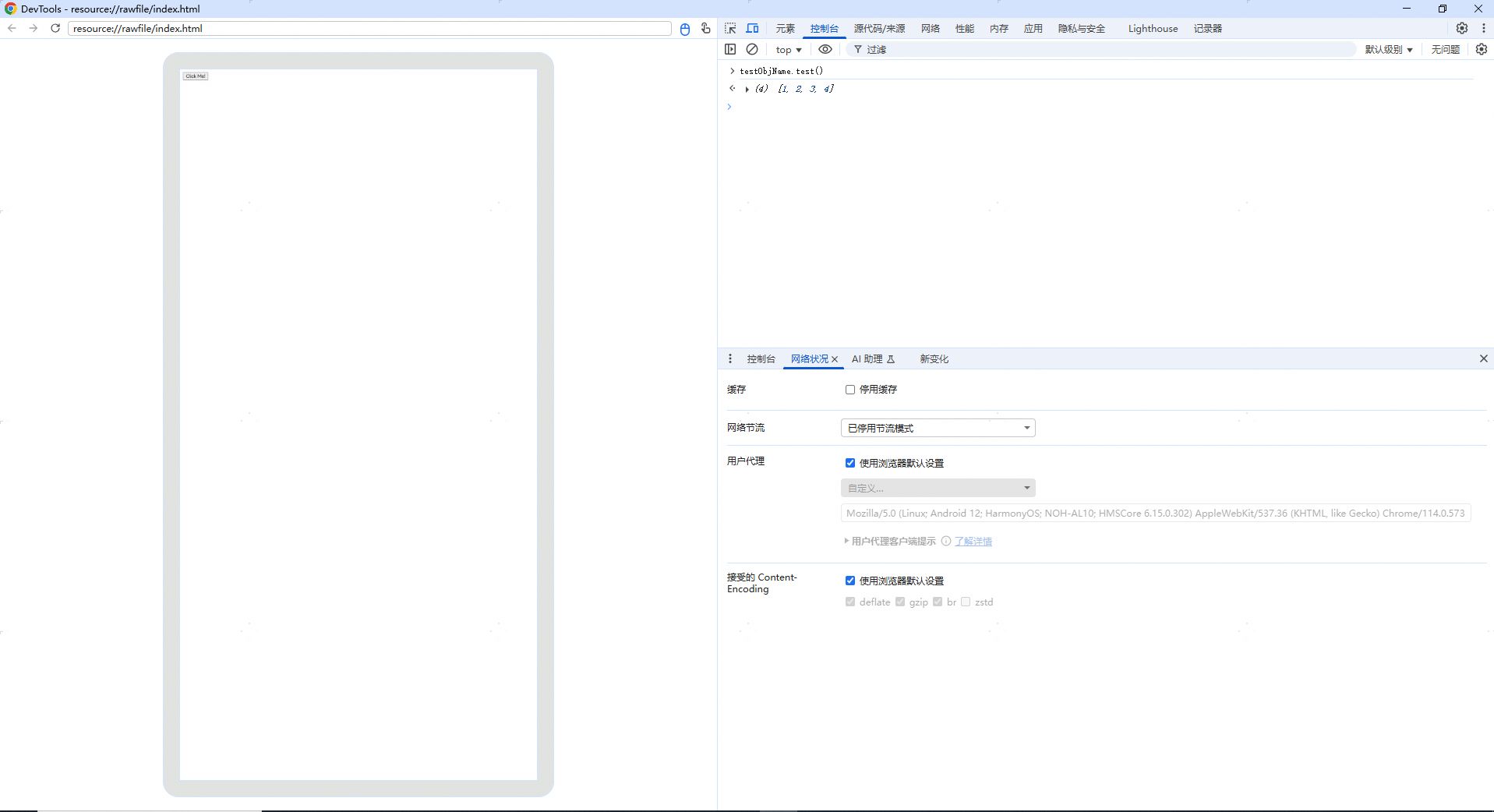
举例说明通道是否建立成功。
使用复杂类型使用方法中应用侧和前端页面之间传递Array作为示例,调试结果如下图所示: