问题现象
- 场景一: 使用as类型断言不能转换JSON.parse()方法解析的JSON字符串中成员属性的数据类型。举例说明:
// 用ItemModel类接收responseData中JSON字符串的内容 let responseData = `{"id":123,"name":"Example","price":200}` // 在responseData中的price值为number类型的200 class ItemModel { id?: number; name?: string; price?: string; // 作为接收类的ItemModel中price类型为string } // 调用JSON.parse()解析JSON字符串,并用as得到ItemModel类型实例 let item = JSON.parse(responseData) as ItemModel; // 此时得到item.price类型为number而非定义的string console.info(`typeofprice: ${typeof item.price}`); // 输出为typeofprice:number - 场景二: 使用params为options赋值,但是as number未生效,options接收到的依旧是带引号的string类型。
  private options: mapCommon.MapOptions = {
    position: {
      target: {
        latitude: 0,
        longitude: 0,
      },
      zoom: 15,
    }
  };

  let params: Record<string, Object> = {
    'latitude': '39.9',
    'longitude': '116.4'
  }

  let lat = params['latitude'] as number;
  let lon = params['longitude'] as number;

  this.options.position.target.latitude = lat;
  this.options.position.target.longitude = lon;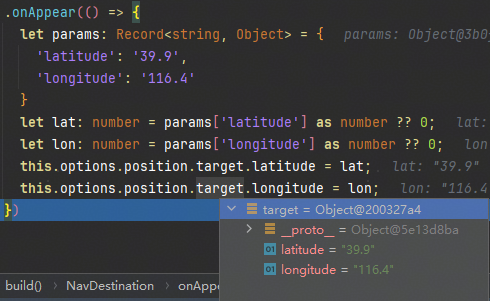
- 场景三: 对对象类型使用类型断言,DevEco Studio静态检查报错Object literal must correspond to some explicitly declared class or interface (arkts-no-untyped-obj-literals) :
interface Test { a: string; b: string; } const a = { a: 'aa', b: 'bb', c: 'cc' } as Test - 场景四: 在ArkTS中,通过HTTP请求等方式获取JSON数据并反序列化为类实例时,如果JSON数据中缺少类中已定义且带有默认值的字段,反序列化后该字段的默认值会丢失,变为undefined。
解决方案
- 场景一:
- 方案一:可以为ItemModel类定义构造函数,在构造函数中实现类型转换。示例代码如下:
  class ItemModel {
    id?: number;
    name?: string;
    price?: string;

    constructor(data: Record<string, Object>) {
      this.id = data['id'] as number;
      this.name = data['name'] as string;
      this.price = String(data['price']); // 将number类型的price转换为string
    }
  }

  let responseData = `{"id":123,"name":"Example","price":200}`;
  let parsedData = JSON.parse(responseData) as Record<string, Object>;
  let item = new ItemModel(parsedData);

  console.info(`typeof price: ${typeof item.price}`); // 输出为typeofprice:string
- 方案二:利用JSON.parse的reviver参数,手动转换key为price时value的类型。示例代码如下:
  let responseData = `{"id":123,"name":"Example","price":200}`;

  // 使用reviver参数在解析时将price的值转换为string类型
  let item = JSON.parse(responseData, (key: string, value: Object) => {
    if (key === 'price') {
      return String(value);
    }
    return value;
  });

  console.info(`typeof price: ${typeof item.price}`); // 输出为typeofprice:string
- 方案一:可以为ItemModel类定义构造函数,在构造函数中实现类型转换。示例代码如下:
- 场景二:
将params类型改为Record<string, number>或者将value值去掉引号(''),在ArkTS中,as关键字是类型断言的一种语法,它不会在运行时改变值的类型,只是在编译阶段告知编译器以特定类型来处理这个值。
- 场景三:
断言类型Test与被断言对象的类型不完全一致,阅读示例代码发现类型Test缺少了一个名为c的属性,在类型Test中增加该属性的声明即可。
- 场景四:
在ArkTS中,通过HTTP请求获取JSON数据并使用JSON.parse()等方法进行反序列化时,解析过程仅根据JSON字符串中实际存在的字段生成对应数据,不会调用类的构造函数,也不会保留类中定义的默认值。因此,若JSON数据中缺少类中已定义的字段,反序列化后该字段将变为undefined。
目前没有其他自动保留类默认值的方案,开发者需要在反序列化完成后手动检查并为缺失的字段赋默认值,或者在自定义的数据解析逻辑中统一处理字段的默认值。