The control units provide instruction control for the entire computing process and are responsible for running the entire AI Core. Figure 1 shows the control units of an AI Core. For details about each module, see Table 1.
Figure 1 Control units
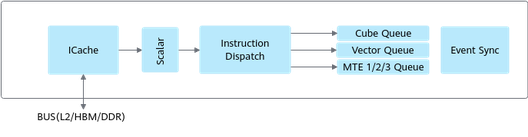
Table 1 Control units and related instruction queues (pipes)
| Control Unit/Instruction Queue | Description |
|---|---|
| Scalar Unit | Scalar compute unit. |
| Cube Queue | Cube instruction queue. Instructions in the same queue are executed in sequence, and instructions in different queues can be executed in parallel. |
| Vector Queue | Vector instruction queue. Instructions in the same queue are executed in sequence, and instructions in different queues can be executed in parallel. |
| MTE Queue | MTE instruction queue. Instructions in the same queue are executed in sequence, and instructions in different queues can be executed in parallel. |
| Event Sync | A module used to control the dependency and synchronization between instructions across queues. |
Multiple instructions enter the instruction cache module of the AI Core from the system memory through the bus. Based on the instruction type, there are two kinds of subsequent instruction execution processes:
For a scalar instruction, it will be executed immediately by the Scalar Unit.
For other instructions, they are scheduled to five independent queues (Vector Queue, Cube Queue, and MTE1/MTE2/MTE3 Queues), and then allocated to an execution unit for execution.
Instructions in the same queue are executed according to their enqueue sequence, and instructions in different queues can be executed in parallel. Such parallelism improves overall execution efficiency. For data dependency that may occur during parallel execution, the Event Sync module inserts synchronization instructions to control pipeline synchronization. The PipeBarrier and SetFlag/WaitFlag instructions are provided to ensure that the instructions inside a queue and across queues are executed based on the logical relationship.
PipeBarrier synchronizes the instructions in the same queue. Instructions after the barrier cannot issue until all instructions before the barrier are committed.
SetFlag and WaitFlag are a pair of inter-queue synchronization instructions.
- SetFlag: The current instruction starts to be executed after all read and write operations of the current instruction are completed and the corresponding flag bit in hardware is set to 1.
- WaitFlag: When this instruction is executed, if the corresponding flag bit is 0, the subsequent instructions in the queue are blocked; if the corresponding flag bit is 1, the subsequent instructions are executed after this bit is changed to 0.
Ascend C APIs provide interfaces for synchronization control. You can use these types of APIs to implement synchronization control. It is recommended that you program based on the paradigm described in Programming Model. This programming model helps you implement synchronization control, avoiding the programming complexity caused by manual synchronization control. However, understanding the basic principles of synchronization will help you better design parallel computing programs.